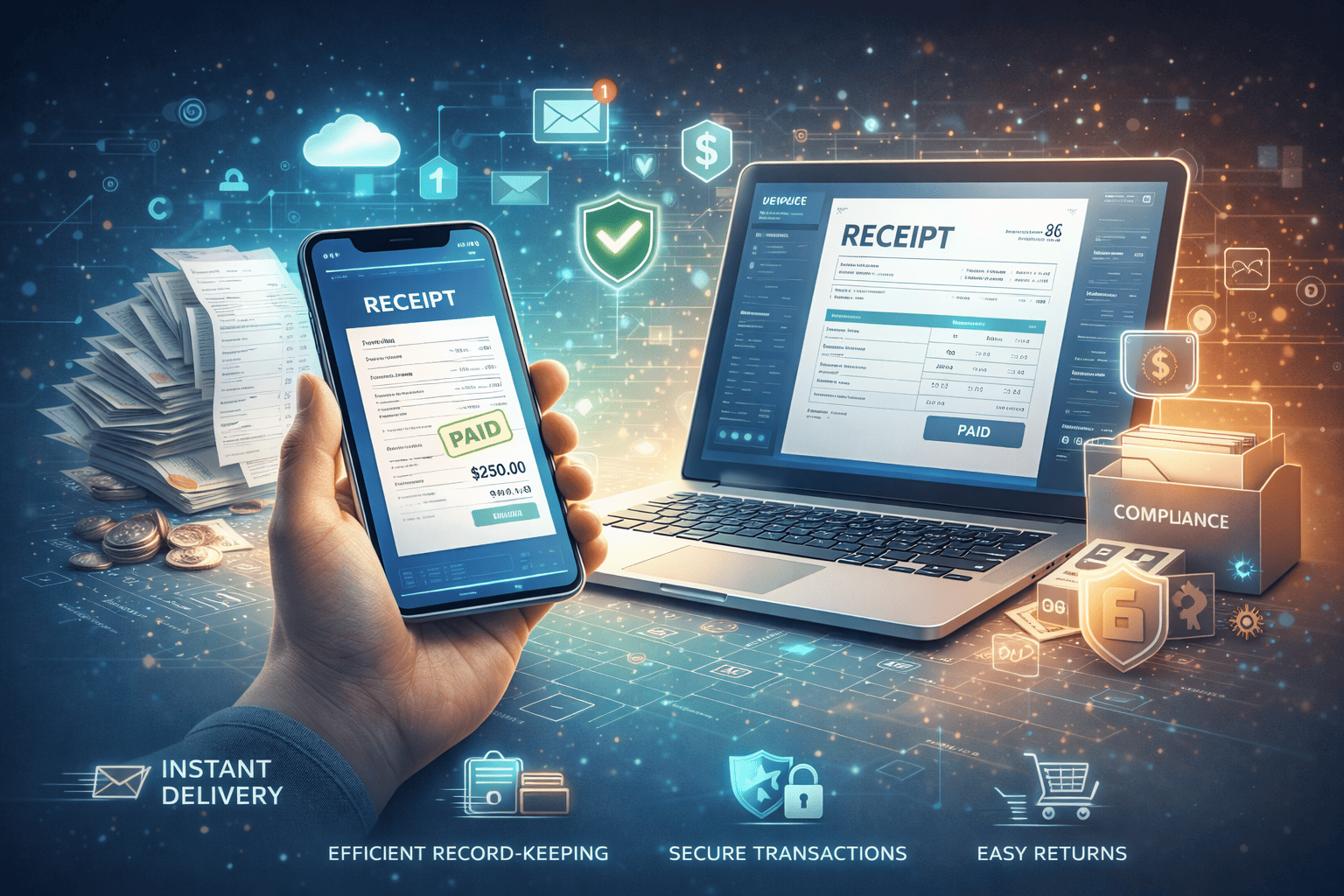
The Invoice Evolution: From Paper Hassle to Automated Efficiency
The backbone of commerce has always been the invoice. For centuries, this document—a simple record of a transaction—was painstakingly handwritten or typed on paper, stored in filing cabinets, and prone to human error. Today, that narrative has completely shifted. The advent of sophisticated financial technology has propelled us into an age where invoicing is no longer a clerical chore but an automated, strategic asset. This deep dive explores the fascinating journey of invoicing digitization, culminating in the revolution of Smart Digital Invoices.
The Dawn of Accounting: Paper and Manual Ledgers
Before the personal computer, invoices were synonymous with paper. Businesses relied on manual data entry, postage stamps, and complex physical filing systems. This traditional method was not only time-consuming and expensive but also introduced substantial risk, including late payments due to mailing delays and high rates of data entry errors requiring costly reconciliation. Audits were cumbersome, often requiring the retrieval of documents stretching back years.
The First Digital Leap: Email and PDFs
The internet age brought the first significant step toward digitization. Businesses began utilizing spreadsheets, word processors, and eventually, the universal PDF format. Sending invoices via email significantly reduced delivery time and postage costs. However, this method was only partially automated. While delivery was instant, the recipient still had to manually process the data, inputting the details into their own accounting system—a process known as ‘PDF trapping’—which still harbored inefficiencies and opportunities for error.
The Era of Automation: EDI and E-Invoicing Mandates
True automation began with Electronic Data Interchange (EDI). EDI established standardized formats allowing two computer systems to exchange transactional data directly without human intervention. More recently, governments worldwide have driven the mass adoption of formal e-invoicing, mandating structured, machine-readable formats (like UBL or XML) for B2B and B2G transactions. This move standardized the process, making cross-border trade faster and significantly improving tax compliance and audit trails, moving beyond simple image-based digital documents.
Smart Digital Invoices: The Future is Here
We are now witnessing the maturation of invoicing systems, powered by Artificial Intelligence (AI) and Machine Learning (ML). Smart Digital Invoices are self-validating, meaning they automatically check against purchase orders, contracts, and internal budgets before processing. These systems use optical character recognition (OCR) for hybrid input and sophisticated algorithms for three-way matching, virtually eliminating manual intervention.
Furthermore, concepts like blockchain are entering the scene, paving the way for invoices linked to smart contracts. These contracts can automatically trigger payment upon successful service delivery confirmation, guaranteeing transparency and immediate settlement. This advanced automation minimizes the cycle time from service delivery to payment, drastically improving cash flow management for enterprises of all sizes.
Maximizing Efficiency and Compliance
The shift from dusty archives to instantaneous, structured data exchange represents more than just a convenience upgrade; it’s a foundational change in global finance. Modern Smart Digital Invoices offer unparalleled accuracy, real-time tracking, and inherent compliance features that meet complex regional tax requirements instantly. Businesses utilizing these systems gain a significant competitive edge through reduced operational costs and superior data insights, transforming the Accounts Payable and Accounts Receivable functions from cost centers into drivers of efficiency and profitability.