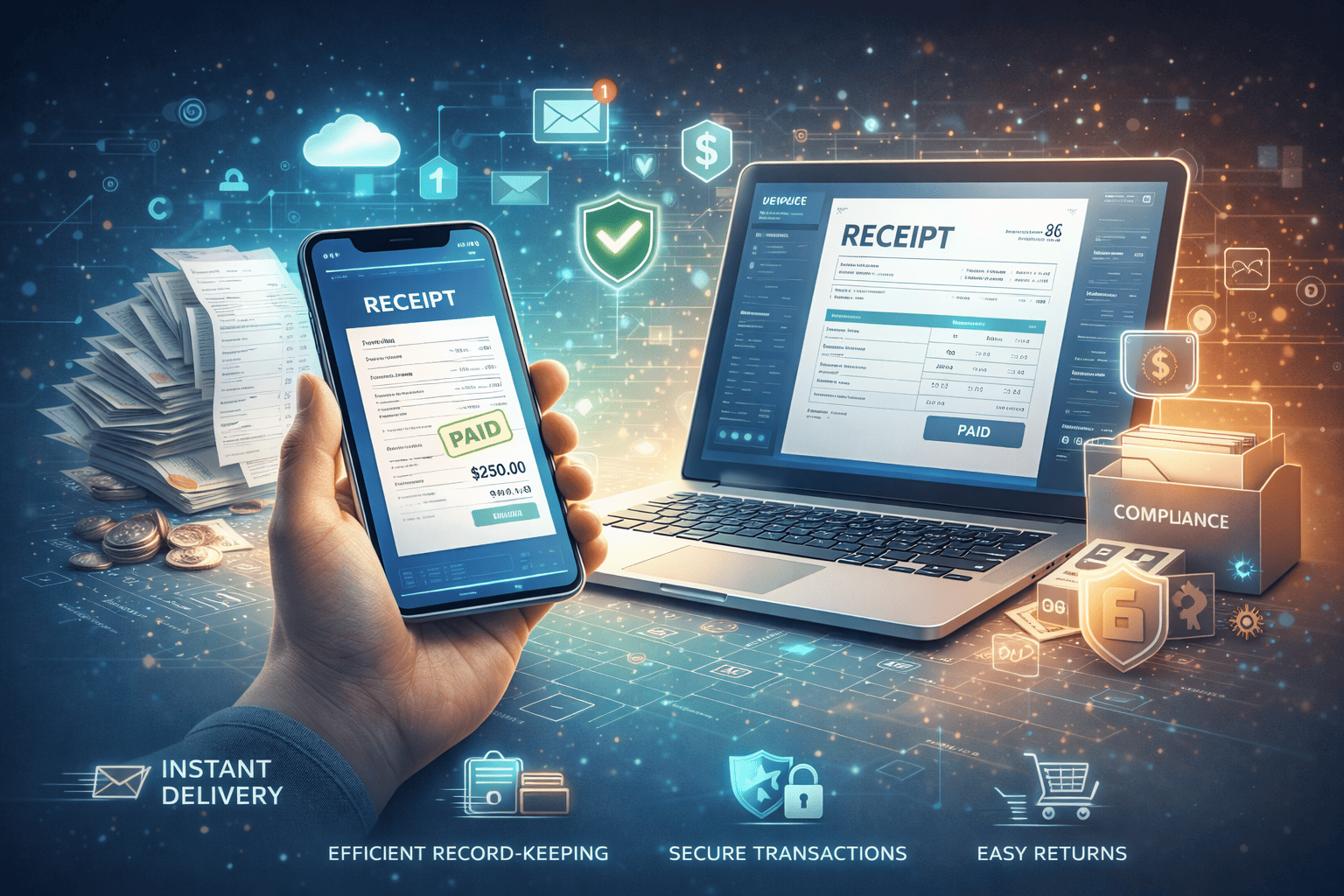
Introduction: The Necessity of Transactional Evidence
In the fast-paced world of commerce, customer disputes are an inevitable reality. Whether dealing with a misunderstanding over a service charge or a challenge regarding product delivery, businesses face constant pressure to resolve these issues swiftly and fairly. The bedrock of efficient dispute resolution, and often the most overlooked asset, is the comprehensive payment receipt. Far more than just a confirmation of payment, a well-detailed receipt is the definitive document that turns ambiguity into clarity, protecting both the consumer and the business.
The Unbreakable Proof of Purchase
A payment receipt serves as the indisputable ‘smoking gun’ in nearly all customer service conflicts. Without verifiable evidence of a purchase, claims—whether related to returns, warranty issues, or service failures—become subjective and difficult to manage. Receipts provide concrete proof that a transaction occurred, establishing the foundational timeline and legitimacy required to proceed with any resolution process. This minimizes potential losses for the company and ensures honest customers receive the service or refund they are due. By standardizing receipt formats, companies ensure crucial evidence is always available when confronting payment receipts customer disputes.
Detailed Records: Clarity in Confusion
The power of a receipt lies in its granularity. Modern point-of-sale (POS) systems generate receipts that include critical data points essential for resolving complex disagreements. This includes the date and time of the transaction, the specific store or service location, the total amount paid, the payment method used, and, most importantly, an itemized breakdown of goods or services purchased. When a customer disputes an invoice, referencing the unique transaction ID and itemized list immediately narrows the scope of the disagreement, allowing support staff to quickly identify where the error (if any) occurred. This immediate clarity drastically reduces investigation time, making resolution of payment receipts customer disputes quicker and more accurate.
Minimizing Chargebacks and Preventing Fraud
For businesses dealing with high volumes of online or card-present transactions, chargebacks are a significant financial burden. When a customer disputes a charge directly with their bank, the business must provide compelling evidence to counteract the claim. Payment receipts are the primary defense mechanism in these scenarios. Providing the bank with a receipt matching the disputed transaction date, amount, and, ideally, the cardholder’s location/IP address (for digital receipts) significantly increases the likelihood of successfully challenging the chargeback. Furthermore, robust receipt systems help flag potential fraudulent activity by showing purchase patterns or duplicate transactions, enabling preemptive security measures.
Streamlining the Customer Resolution Experience
Ultimately, the efficient use of payment receipts leads to superior customer satisfaction. When a customer presents a receipt, the resolution path is often instantaneous. If the transaction details align with company policy (e.g., return windows, service agreements), the process bypasses lengthy internal investigations. By relying on objective financial evidence—the receipt—businesses build trust, demonstrate transparency, and convert a potentially negative dispute experience into a positive, successful resolution. Implementing easy-to-access digital receipt archives further strengthens this efficiency, ensuring that transactional proof is always available when needed to resolve payment receipts customer disputes effectively.