
The Definitive Guide to the Digital Invoicing Evolution: From Paper Bills to Smart Automation

The Era of Carbon Copy and Post Office Delays

For centuries, the exchange of goods and services culminated in a tangible piece of paper: the invoice. Before the digital invoicing evolution, businesses relied heavily on manual data entry, carbon copies, stamps, and postal services. This traditional method, while standard, was inherently slow, expensive, and notoriously prone to human error. A misplaced decimal, a lost envelope, or a slow accounts payable department could cripple cash flow and sour vendor relationships.

The Initial Digital Shift: PDFs and Early E-Invoicing

The late 20th century introduced the first major pivot: electronic invoicing, primarily through email attachments. Moving from physical printing to creating a PDF was a significant leap in speed and cost reduction. However, this early form of e-invoicing was still fundamentally manual. While delivery was instantaneous, the recipient still had to manually enter the data from the PDF into their accounting system. This bottleneck meant that the ‘digital’ invoice was still processed like a paper one, failing to unlock true automation potential.

Smart Digital Invoices: Efficiency Redefined

Today’s landscape is dominated by sophisticated, cloud-based systems that transform a simple bill into a dynamic data exchange. The modern Smart Digital Invoices are not just electronic documents; they are structured data sets that speak directly to accounting software. Using technologies like optical character recognition (OCR), artificial intelligence (AI), and secure API integration, these invoices eliminate data entry entirely.

Key features of smart digital systems include:

  • Real-Time Tracking: Know exactly when an invoice is delivered, viewed, and approved.
  • Automated Compliance: Ensure VAT, GST, and regulatory requirements are met across jurisdictions.
  • Integrated Payment Gateways: Allow clients to pay directly from the invoice link, accelerating cash realization.

Accelerating the Financial Close

The adoption of standardized, structured smart digital invoices is rapidly becoming essential for operational survival. Companies leveraging these tools report dramatic reductions in processing costs (up to 70% in some cases) and a marked increase in accuracy. Furthermore, by speeding up the accounts receivable cycle, businesses gain healthier working capital, a crucial advantage in a fast-moving economy. This seamless transition from generation to payment represents the pinnacle of the digital invoicing evolution.

The Future is Fully Automated and Secure

As we look forward, the trend points toward deeper integration using emerging technologies like blockchain for immutable transaction records and further refinement of AI for predictive cash flow management. The future of invoicing is not just paperless; it is fully automated, instant, and secured against fraud, making the ancient practice of paper billing a distant, inefficient memory.
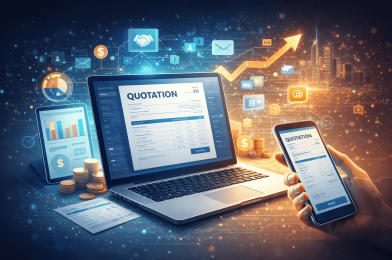

Tagged : / / / / / / /

The Complete History: The Evolution of Invoicing from Paper Bills to Smart Digital Systems

The Silent Revolution in Finance: Why Paper Bills Are Extinct

For centuries, the exchange of goods and services relied on cumbersome physical documents. Before the era of instantaneous financial transactions, the invoice—a simple record of a debt—was a critical piece of paper, often stored in dusty ledgers and sent via slow postal services. Today, finance departments worldwide are witnessing one of the fastest digital transformations, moving from these error-prone paper trails to sophisticated, automated digital invoicing systems. This evolution is not just about convenience; it’s about establishing a foundation for real-time commerce and enhanced financial security.

The Dawn of Commerce: The Limitations of the Paper Trail

In the pre-digital age, the workflow surrounding an invoice was manual and multi-layered. Businesses had to print, fold, stamp, and mail bills, leading to significant delays in payment cycles. Furthermore, manual data entry upon receipt was the standard, a process infamous for human error, leading to misapplied funds, disputes, and lengthy reconciliation periods. Storing physical documents required vast archives, complicating audits and compliance checks. The paper invoice, while historically essential, became a major bottleneck in the acceleration of modern business operations.

The Transitional Phase: From Fax to Standardized PDFs

The first significant leap came with the adoption of email and digitized formats. The fax machine provided an early, albeit primitive, method of faster transmission. However, the widespread introduction of the PDF format allowed companies to send visual replicas of invoices instantly. While an improvement in speed, this phase was still transitional. A PDF invoice, though digital for transmission, still required manual intervention—someone had to open the document, read the data, and key it into the recipient’s accounting system. This semi-digital process only solved the transmission problem, leaving the critical data processing challenge intact.

Smart Invoicing: AI, Automation, and True Efficiency

The current generation of invoicing leverages true smart technology, marking the definitive end of the manual workflow. Modern e-invoicing systems utilize structured data formats (like XML or UBL) and technologies such as Electronic Data Interchange (EDI) and Application Programming Interfaces (APIs). This allows invoices to be sent directly from one accounting system to another, without human interference.

Artificial Intelligence (AI) and Machine Learning (ML) play a crucial role in modern accounts payable (AP) automation. These systems can instantly read unstructured data from legacy formats, automatically match invoices against purchase orders (PO) and goods receipts, flag discrepancies for human review, and categorize expenses. Benefits include processing times reduced from weeks to mere hours, dramatic reduction in processing costs, and near-perfect accuracy.

The Future is Real-Time and Secure

The evolution towards smart, compliant digital invoicing is central to the broader financial ecosystem. It enables real-time cash flow visibility, drastically lowers the risk of fraud inherent in paper systems, and facilitates faster payment cycles. As regulations increasingly mandate structured e-invoicing (especially in Europe and parts of Latin America), businesses that embrace full automation are gaining a significant competitive edge. The future promises even greater integration, potentially utilizing blockchain technology for immutable, instant-settlement invoicing, solidifying the paper invoice’s place as a relic of history.

Tagged : / / / / / / /

From Quill to Cloud: The Transformative Evolution of Invoicing

From Parchment Scrolls to Cloud Platforms: The Transformative Evolution of Invoicing

Invoicing, the backbone of commerce, has undergone a breathtaking transformation over the past century. What began as a laborious process involving quills, ledger books, and postage stamps has morphed into a sophisticated, automated ecosystem leveraging AI and blockchain. Understanding this evolution of invoicing is crucial for any business aiming for peak operational efficiency and compliance.

The Analog Age: Paper Bills and Manual Labor

For centuries, invoicing was synonymous with paper. Accountants spent countless hours manually generating, printing, and mailing physical documents. This system was slow, expensive, and notoriously prone to human error. Disputes were common, storage was bulky, and tracking payment status required complex manual reconciliation. The dependency on physical delivery meant payments lagged significantly behind sales, straining cash flow.

The First Digital Step: PDFs and Email

The advent of personal computing in the late 20th century marked the first major shift. Businesses began creating invoices using word processors and spreadsheets, saving them as PDFs, and sending them via fax or, eventually, email. While this dramatically accelerated delivery and reduced printing costs, it was only a partial solution. These invoices were essentially ‘digital paper’—unstructured data that still required the recipient to manually input information into their own accounting systems. This period created the ‘data entry gap,’ limiting true automation.

The Smart Invoice Revolution: E-Invoicing and Automation

The true digital revolution lies in ‘smart’ or structured e-invoicing. Modern standards, such as those governed by PEPPOL or local governmental mandates (like mandatory B2B e-invoicing across Europe and parts of Asia), ensure that invoices are not just digital documents, but structured data files (XML, JSON) transmitted directly between software platforms. This eliminates data entry entirely, enabling ‘straight-through processing.’

Today’s platforms offer end-to-end automation. Features include automated purchase order matching, real-time approval workflows, dynamic discounts, and seamless integration with ERP systems. Artificial Intelligence (AI) and Machine Learning (ML) further enhance this by flagging fraudulent invoices, predicting cash flow volatility, and automating compliance checks against complex international tax regulations (like VAT or GST).

The Future is Now: Efficiency, Compliance, and Sustainability

The benefits of adopting smart digital invoices are massive. Businesses experience rapid processing times (often reducing invoice cycles from weeks to hours), drastic cost reductions (eliminating printing, postage, and manual labor), and significant improvements in accuracy. Furthermore, e-invoicing supports sustainability goals by drastically reducing paper consumption. For companies navigating global supply chains, mandated e-invoicing is fast becoming a requirement, not an option, making the transition to robust, cloud-based invoicing platforms essential for future competitiveness and regulatory adherence.

Tagged : / / / / / / /